

Community Involvement
Supporting Clinton Animal Shelter C.A.R.E.
We're honored to support Clinton Animal Shelter through a variety of programs designed to help dogs thrive and find loving homes. Here's how we partner with Clinton Animal Rescue Endeavor (C.A.R.E.):
Our Partnership Includes:
-
Weekly group training sessions open to shelter dogs, foster dogs, and recent adoptees from the local shelter
-
Complimentary board and train services for shelter dogs at no charge to the organization
-
Private training lessons for dogs in foster care
-
Emergency boarding support when the shelter reaches capacity during severe weather or crisis situations, ensuring every dog has a safe, comfortable place to stay
-
Social media amplification by regularly sharing their posts to increase visibility for dogs awaiting adoption
-
Video content creation featuring shelter dogs to boost their online presence and adoption prospects
-
Advocacy work to update local city ordinances covering leash laws, breeding regulations, and mandatory pet registration—changes that could generate over $12,000 annually for the shelter. Learn more about our current proposal [here].
Training That Transforms Lives
Our professional training services equip Clinton Animal Shelter dogs with the foundation they need for successful, lasting adoptions. We perform SAFER assessments (details below) to evaluate behavior and determine appropriate intervention strategies. Through our group classes, board and train programs, and foster-based private lessons—all covering basic obedience, socialization, and customized behavior modification—we give these deserving dogs the best possible start in their new lives.
Beyond training, we enhance the shelter's outreach by creating compelling photos and videos that capture each dog's unique personality for social media. These authentic glimpses help potential adopters connect emotionally and see the loyal companion behind the kennel door. From dog walking to fundraising events to boosting their online content, we remain actively engaged with Clinton Animal Shelter, ready to help wherever we're needed.
Every dog deserves a second chance, and we're proud to contribute to that mission alongside the compassionate team at Clinton Animal Shelter who dedicate themselves to these animals daily.
What is the SAFER Assessment?
At Dalmatia BnB we are passionate about improving the lives of dogs and their owners. To help accomplish our mission we work closely with the Clinton Animal Shelter. Using the SAFER Assessment we can determine if a dog is aggressive, what kind of aggression they have, and what kind of rehabilitation is needed to help them overcome their aggression.
The SAFER (Safety Assessment for Evaluating Rehoming) Assessment is a standardized behavioral evaluation used to assess the potential for aggression in dogs. Developed by Dr. Emily Weiss and adopted by many animal shelters, the SAFER Assessment helps to evaluate a dog's behavior in various situations that mimic real-life interactions. This evaluation is critical for determining the best possible outcomes for dogs in shelters, ensuring the safety of both humans and animals.
Purpose of the SAFER Assessment
The primary purpose of the SAFER Assessment is to:
-
Identify Aggressive Tendencies: Assess the potential for aggressive behavior in dogs to ensure they are safe for rehoming.
-
Understand Behavioral Triggers: Determine specific situations or triggers that may lead to aggression.
-
Guide Training and Rehabilitation: Provide valuable information to create behavior modification plans tailored to individual dogs.
-
Inform Adoption Decisions: Aid in making informed decisions about the suitability of dogs for adoption into various types of homes.
Components of the SAFER Assessment
The SAFER Assessment consists of seven standardized subtests, each designed to elicit specific responses from the dog:
-
Look: Evaluates the dog’s reaction to being stared at in the eyes.
-
Sensitivity: Measures response to gentle handling and touching.
-
Tag: Assesses reaction to being playfully touched and engaged in a game.
-
Squeeze: Evaluates tolerance to paw handling and mild discomfort.
-
Food Behavior: Tests behavior around food, assessing for guarding tendencies.
-
Toy Behavior: Measures the dog's possessiveness over toys.
-
Dog-to-Dog Behavior: Observes reactions to other dogs, usually through a barrier.
Using the SAFER Assessment at a Local Shelter
At the local shelter, the SAFER Assessment is used systematically to evaluate each dog upon intake or before being placed up for adoption. Here is how the process typically works:
-
Preparation:
-
Environment: Conduct the assessment in a quiet, controlled environment to minimize external stressors.
-
Tools: Use standardized tools such as a fake hand for food and toy behavior tests, a leash, and toys.
-
-
Conducting the Assessment:
-
Trained Assessors: Only trained staff members or volunteers who understand dog behavior and the SAFER protocol conduct the assessment.
-
Observation: Carefully observe and document the dog’s responses to each subtest, noting any signs of aggression, fear, or stress.
-
-
Scoring and Analysis:
-
Each subtest is scored based on the dog’s reactions, with specific criteria for scoring ranging from relaxed and friendly to highly aggressive.
-
Analyze the scores to determine the overall aggression level and identify any specific triggers or types of aggression (e.g., fear-based, resource guarding).
-
-
Outcome and Action Plan:
-
Behavior Modification: Develop a tailored behavior modification plan for dogs with manageable aggression issues.
-
Training Recommendations: Provide training recommendations for adopters, particularly for dogs that show mild to moderate aggression.
-
Adoption Decisions: Make informed decisions about the types of homes suitable for each dog. Dogs with severe aggression may be placed in specialized foster care or with experienced handlers.
-
-
Follow-Up:
-
Monitor the dog’s behavior during its stay at the shelter and re-evaluate as necessary.
-
Provide ongoing support and advice to adopters to ensure successful integration into their new homes.
-
Benefits of Using the SAFER Assessment
-
Increased Safety: Enhances the safety of shelter staff, volunteers, and potential adopters by identifying dogs with aggressive tendencies.
-
Better Outcomes: Improves the chances of successful adoptions by matching dogs with appropriate homes and providing necessary training and support.
-
Informed Decisions: Empowers shelter staff with detailed behavioral information, leading to better decision-making regarding the management and placement of dogs.
In summary, the SAFER Assessment is a crucial tool used in animal shelters to evaluate and understand dog aggression. By systematically assessing dogs' behavior, shelters can ensure the safety of their staff, volunteers, and adopters, while also increasing the likelihood of successful rehoming for the dogs.
Below are examples of some of the tools we use to conduct the SAFER Assessment


Dalmatia BnB is now a Besty BnB Approved Caregiver!
As a Besty BnB Caregiver, we provide temporary, confidential foster care for pets whose owners are experiencing a crisis, such as domestic violence, homelessness, or medical treatment. We offer a safe, home-based environment for the animal until the owner can be reunited with their pet, often at no cost to the owner as services can be donated or provided by partner agencies.
Did you know?
71% of individuals in domestic violence shelters report their abuser threatened, injured or killed a pet.
—National Coalition Against Domestic Violence

Therapy Dog Work
Rebecca and Faith are a Certified Therapy Dog Team through the Alliance of Therapy Dogs. We are members of a group called TAILS, Therapy Animals Impacting Lives. Our therapy teams bring joy to others through the power of animals in Central Missouri. We are always looking for new places to bring our therapy dogs (and pony) and we welcome anyone who is interested in joining our team!


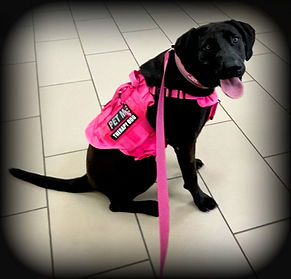
Faith: From Shelter to Service
Faith's journey is a testament to the transformative power of second chances and the incredible bond between humans and dogs. Her story began on October 28, 2024, when she arrived at the Jefferson City Animal Shelter as a young Labrador Retriever, approximately two years old, with an unknown past but an unlimited future ahead of her.
Recognizing Faith's potential, JCAS enrolled her in the Jefferson City Correctional Center's Puppies for Parole Program on November 8, 2024. This innovative program pairs shelter dogs with dedicated inmate trainers who provide intensive, personalized training. Faith was matched with a trainer who worked specifically to prepare her for her calling as a therapy dog.
Faith's intelligence and eagerness to learn quickly became apparent. Her natural ability to absorb new information, combined with her genuine desire to work and please, made her an exceptional student. Through the program, she mastered approximately 40 commands, demonstrating not only her cognitive abilities but also her deep commitment to her training.
On February 6, 2025, Faith officially joined her forever family, beginning a new chapter filled with purpose and love. Her training didn't stop there – daily work sessions continued to refine her skills and strengthen the human-canine partnership that would soon serve others.
The culmination of Faith's journey came on May 20, 2025, when she and her handler were certified as a Pet Therapy Team through the Alliance of Therapy Dogs. This certification marked the beginning of Faith's true calling: bringing comfort, joy, and healing to those who need it most.
Today, as a member of the therapy dog group, TAILS, Faith makes weekly visits to Golden Valley Memorial Hospital and Clinton Healthcare and Rehabilitation where her gentle presence and loving nature provide emotional support and happiness to patients, residents, and staff. Her transformation from a shelter dog with an uncertain future to a certified therapy dog making a meaningful difference in people's lives embodies the incredible potential that exists when compassion meets opportunity.
Faith's story continues to unfold each day as she touches lives and proves that sometimes the most profound healing comes on four paws, with a wagging tail and an open heart.
Update! Faith and I have officially become Golden Valley Memorial Healthcare Volunteers! Faith has a new vest and ID card to make it official! Watch our social media for updates on Faith's journey.
.jpeg)
.png)
